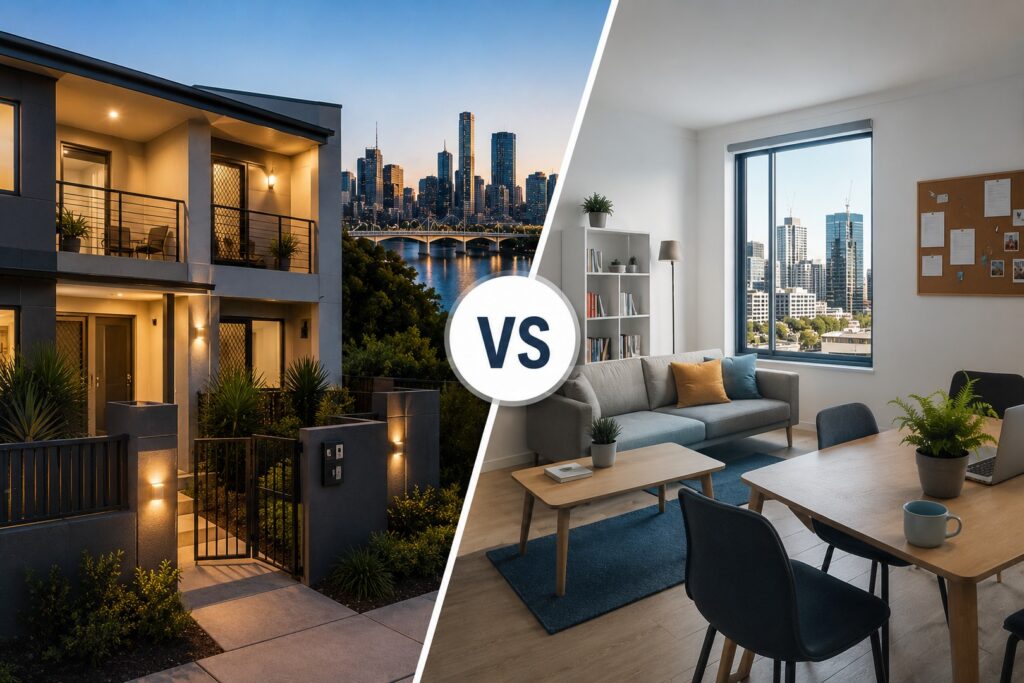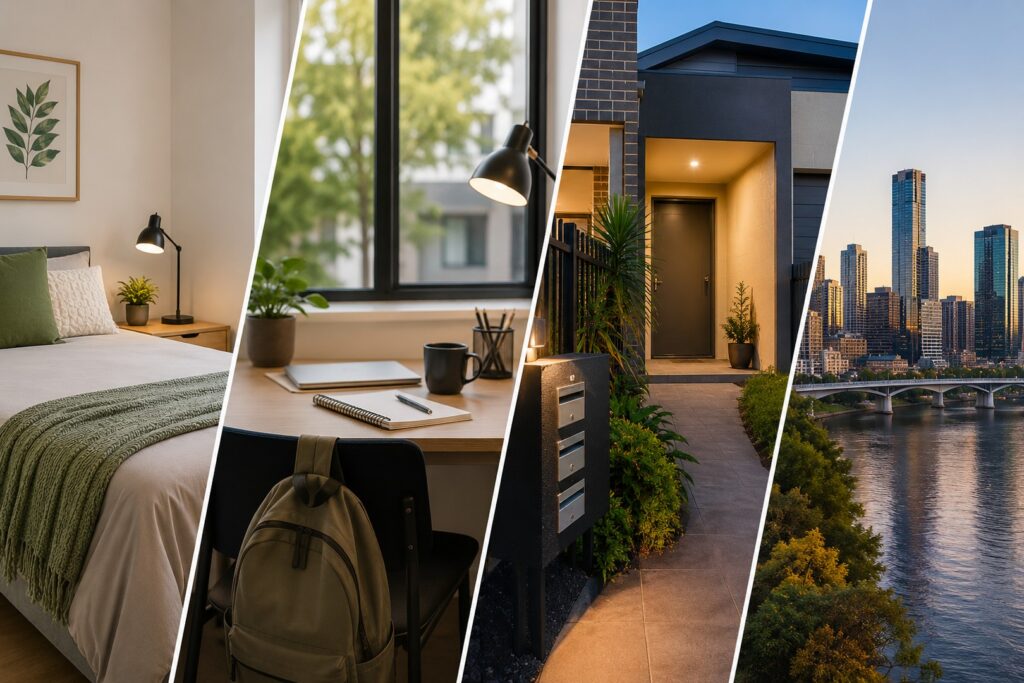
Shared living options are often more affordable than renting an entire apartment. However, many potential renters are confused by two terms they often come across: boarding house and rooming house.
At first, both options may seem to have the same structure, and in many ways, they may be similar. However, before you sign a lease and pay a bond, it’s important to know how the two options differ.
What are Rooming Houses?
In Queensland, a rooming house typically describes a situation where a person rents a room and shares the kitchen, bathroom, laundry, and/or living room with other residents. According to Tenants Queensland, rooming accommodation describes a situation where people rent rooms and where at least some of the residents share a kitchen and/or bathroom.
What’s a Boarding House?
A boarding house is an older term used to describe accommodation where a number of people rent rooms in the same house or unit. Residents typically have their own room, but may share bathrooms, kitchens, dining rooms, and laundry.
In some boarding houses, residents may share meals, or other basic services may be included. In some, residents live independently and only share basic services and facilities. This may change based on the house and management and the local rules.
For renters, you should keep this in mind. A boarding house almost always indicates a house where people share accommodation. Similar to a house share, you are renting a room, not the house, and will be sharing some areas.
Under Queensland’s government housing information, residential services are a form of rooming accommodation, which are often referred to as boarding houses, senior rentals, or supported accommodation. Furthermore, it outlines how residential services are required to be both registered and accredited to operate in Queensland.
What is a Rooming House?
A rooming house can be seen as a shared accommodation property. In this context, it is where people rent separate rooms. This term is often associated with rooming accommodation with regards to tenancy and planning regulations.
A rooming house can consist of private rooms, however, bathrooms, kitchens and living spaces can be shared, in addition to laundry and a potentially shared living space. Some rooming houses can be equipped with private bathrooms, kitchenettes, air conditioning and Wi-Fi. Even rooming houses can have house rules and secured access.
Individuals searching for rental opportunities online may see the term rooming house for sale brisbane in investment listings and development opportunities. This term may be used more by people looking to invest or develop, however, it is still important to understand what accommodation people are renting and what their rights are.
Difference Between Boarding Houses and Rooming Houses
The primary distinction is usually the language employed and the legal context. “Boarding house” is often the older term and more general, while the “rooming house” and “rooming accommodation” is more often seen the context of formal rentals, planning and compliance.
In general, both can involve renting of a room, with shared facilities. The distinction will usually be dictated by the agreement, services provided, the number of people residing, the set-up of the property and if the accommodation is covered by the rooming accommodation laws.
According to the Residential Tenancies Authority, the Rooming Accommodation and Boarding Houses Act controls Rooming Accommodation, including boarding houses, supported accommodation, and off-campus student accommodation, in the state of Queensland.
Rental Agreements and Rights
Before moving into a boarding house or rooming house, prospective tenants should understand the type of agreement that they will be signing. In the state of Queensland, the Rooming Accommodation Agreement (R18) outlines the terms and conditions of the resident’s occupancy in the rooming accommodation.
Rental agreements are important because they define the resident’s rights, and obligations, the rent and payment periods, the rules of the house, the bond and the dispute process.
Tenants should never rely on verbal statements made regarding rooming accommodation. Tenants should request a written agreement, and a copy should be provided. Renters should carefully read the agreement to understand what the rent covers (i.e. electricity, water, internet, furniture, cleaning, etc. ).
House Rules
A major aspect of rooming accommodation are house rules. These rules generally concern guests, noise, cleaning, and the use of shared and private spaces. The RTA indicates that there are prescribed house rules and property manager house rules. Residents are to be provided a copy of the rules.
Rental accommodation generally relies on clear rules, and the house rules should reflect that. Prospective tenants should carefully assess the house rules before moving into the accommodation.
Privacy and Shared Facilities
Rooming and boarding houses do not guarantee the same privacy as renting a unit. Even if you have a private bedroom, you may still share the bathroom, kitchen, and lounge with other tenants. Here is a list of questions you should ask before renting a bedroom:
– Is the room lockable?
– How many people share the bathroom?
– Is the kitchen cleaned regularly?
– Are guests allowed?
– Who handles maintenance?
– Are there quiet hours?
– Is there secure entry?
All the above factors can impact your comfort.
Why Property Quality Matters
The quality of shared accommodation can vary, and a professionally designed rooming house can provide a higher degree of safety, comfort, privacy, and convenience. Because of this, the work of a rooming house builder Brisbane is significant, particularly in developing areas.
A skilled builder or developer will pay attention to the design of private and secure storage, as well as the selection of durable materials, the control of noise, and the design of the shared areas. Although renters do not directly employ a rooming house builder Brisbane, they greatly benefit from improved design and building standards.
When you are assessing a property, you should not focus only on the rental price. If a property is poorly kept, overcrowded, and unsafe, a low rental price may not be worth it.
Brisbane Rules and Approvals
For rooming accommodation in Brisbane, operators and owners may need Planning or Building approval. According to the Brisbane City Council, establishing a rooming accommodation business will likely require both Planning and Building approvals.
As a renter, it is perfectly reasonable to wonder whether a property is fully approved or registered where necessary, and is being managed professionally. A property that is compliant with laws and regulations is more likely to offer safe and reliable accommodation.
What to Check Before Renting a Rooming or Boarding House
If possible, always view a rooming or boarding house in person before making a decision. This allows you to assess the condition of the rooms, shared facilities, bathrooms, and appliances. It’s also a chance to check the safety features and the security of the locks.
Ask about the total rent, bond, what is (and is not) included, the house rules, the type of agreement, how much notice is required, and contact details for required repairs. Assess whether the house is overcrowded and if the shared facilities are clean and usable.
If you are conducting an online search and find phrases like rooming house for sale brisbane, keep in mind that those descriptions are likely meant to entice investors, not inform potential renters.
Conclusion
Both boarding houses and rooming houses are places where you rent a room and share facilities. The main difference is that “rooming house” is more likely to be associated with formal rooming accommodation laws, while “boarding house” is more likely to be a general or traditional description.
For renters, the most important step is not what the property is called, but what the property provides in terms of your agreement, house rules, shared facilities, costs, privacy, and your rights.
When comparing older boarding houses with modern shared accommodations constructed by rooming house builders in Brisbane, it is critical to thoroughly inspect and ask pertinent questions. Well-managed rooming houses can be an affordable, flexible housing option. Unfortunately, some can be stressful, disorganized, and cost incidental expenses.
Frequently Asked Questions
1. What is the distinction between a boarding house and a rooming house?
A boarding house is usually a general or traditional term describing shared living accommodations. A rooming house is more commonly used to refer to specific formal rooming accommodation regulations and where singular units (rooms) are rented and where communal facilities are shared.
2. Is a rooming house appropriate for Brisbane renters?
Yes, a rooming house is appropriate for Brisbane renters needing flexible and low-cost accommodation. However, they should assess the agreement, the house rules, rent inclusions, and the property for privacy and amenity.
3. What must be assessed prior to renting a rooming house?
Renters should assess whether the room is lockable, how many people share the facilities, what is included in the rent, bond particulars, the house rules, how maintenance is handled, safety features, and the agreement.
4. Why is a rooming house builder Brisbane important?
An experienced rooming house builder Brisbane can enhance the quality of the property with improved designs for more safe, well-built, and durable private and communal rooming house accommodation and integrated spaces.
5. Who typically looks for a rooming house for sale Brisbane?
The search term rooming house for sale Brisbane is typically used by prospective buyers of rooming houses, developers and/or property investors; however, renters looking for a rooming house also use this term.