You’ve probably looked at the rental yields rooming houses generate and thought about converting one of your existing properties. Maybe you own a tired older house that’s underperforming as a standard rental. Or you’ve found a property in a good location that could work as a rooming house with the right modifications. The appeal is obvious. Take an asset generating a 3 to 5 per cent yield and potentially transform it into something delivering 8 to 12 per cent or more.
But here’s what most investors discover pretty quickly. Converting an existing property into a compliant, profitable rooming house isn’t as simple as adding a few bedrooms and calling it done. Brisbane City Council has specific requirements. Class 1B building standards apply. Fire safety, accessibility, parking and layout all need careful consideration. And if you get the conversion wrong, you end up with an expensive project that doesn’t perform, doesn’t comply, or both.
The good news is that successful conversions are absolutely possible when approached strategically. The key is understanding what makes a property suitable for conversion, what compliance hurdles you’ll face, where hidden costs lurk and when conversion makes more sense than building new.
Indigo Construction Company approaches property conversions with the same rigour they bring to purpose-built developments. Their property development consultancy helps investors assess conversion feasibility, navigate compliance requirements and determine whether converting an existing property or building from scratch delivers better long-term returns.
Let’s break down everything you need to know about converting existing Brisbane properties into rooming houses, what works, what doesn’t and how to make smart decisions that protect your investment.
When Conversion Makes Sense
Not every property suits conversion. Some are excellent candidates. Others will cost more to convert than they’ll ever generate in additional rental income.
Large Older Homes on Good-Sized Blocks
Post-war Queenslanders and brick homes from the 60s and 70s often work well. They typically have good ceiling heights, generous room sizes and flexible layouts that accommodate multiple bedrooms without feeling cramped.
Properties in High-Demand Locations
Location drives rooming house success. Properties near universities, hospitals, major transport routes, or employment hubs have the demand fundamentals that support high occupancy regardless of age or style.
Homes with Existing Bathroom Capacity
Properties with 2 or 3 bathrooms already give you a head start. Adding or upgrading bathrooms is expensive. Starting with adequate facilities reduces conversion costs significantly.
Properties with Compliance Potential
Some older homes have structural or site issues that make compliance impossible or prohibitively expensive. Homes that can reasonably meet Class 1B standards, fire safety requirements and parking obligations are better candidates.
Assets with Limited Alternative Use
If a property performs poorly as a standard rental and doesn’t suit subdivision or other development options, conversion might be the best value-add strategy available.
Critical Feasibility Checks Before Committing
Before spending serious money on conversion, run these feasibility checks.
Planning and Zoning
Confirm that rooming house use is permitted in the property’s zone under Brisbane’s City Plan. Some zones don’t allow rooming houses or impose conditions that make them unviable.
Parking Requirements
Brisbane City Council has specific parking requirements for rooming houses. If your site can’t accommodate the required spaces, conversion might not be approved. Properties in areas with good public transport sometimes get reduced parking requirements, but this isn’t guaranteed.
Building Structure and Condition
Engage a building inspector to assess structural integrity. Major foundation issues, roof problems, or structural defects can kill conversion feasibility quickly. Factor in the cost of addressing these before adding conversion costs.
Site Constraints
Consider site access, slope, flood risk, easements and other physical constraints that might complicate construction or prevent compliance.
Financial Viability
Run detailed numbers. Estimate conversion costs, expected rental income, financing costs and operating expenses. Compare projected net returns against alternative uses of the property or capital. If the numbers don’t work with realistic assumptions, reconsider the project.
Indigo Construction Company’s property development consultancy includes feasibility assessments that identify deal-killers early before you’re financially committed.
Understanding Class 1B Compliance Requirements
Converting a Class 1A residential home into a Class 1B rooming house triggers stricter building standards.
Fire Safety Upgrades
This is usually the most significant compliance hurdle. Conversions require interconnected hardwired smoke alarms throughout, fire-rated construction in certain areas (doors, walls, ceilings), clear egress paths from all bedrooms, emergency lighting in hallways and exits, fire extinguishers and blankets and compliance with fire safety management requirements.
Installing these systems in existing buildings often requires opening walls, upgrading electrical and modifying layouts. Costs add up quickly.
Accessibility Standards
Class 1B buildings must provide accessible facilities, including at least one accessible bathroom with appropriate fixtures and circulation space, step-free access to common areas where reasonably achievable and wider doorways in certain locations.
Older homes rarely meet these standards naturally. Retrofitting accessibility features can require significant modifications.
Structural and Safety Standards
Balustrades, stairs, handrails, windows and doors must meet current safety standards. Older homes often have non-compliant elements requiring upgrades.
Ventilation and Natural Light
Bedrooms and common areas need adequate natural ventilation and light. This might require adding windows or modifying layouts.
Building Approval Process
Conversion projects require building approval demonstrating compliance with Class 1B standards. This involves detailed plans, engineering assessments and certifier reviews. The approval process can take months and cost tens of thousands depending on project complexity.
Layout and Design Considerations
Successful conversions require thoughtful layout planning.
Bedroom Configuration
Adding bedrooms sounds simple but requires careful consideration. Rooms need adequate size (minimum floor areas apply), natural light, ventilation and fire egress. Converting oversized living rooms or adding partitions to existing bedrooms can work, but each room must meet minimum standards.
Bathroom Facilities
The general rule is one bathroom per three to four residents. Calculate your target occupancy and ensure bathroom capacity matches. Adding new bathrooms is one of the most expensive conversion elements, often costing $15,000 to $25,000 per bathroom.
Kitchen and Common Areas
Shared kitchens must be adequately sized, well-ventilated and equipped for multiple users. Lounges and communal spaces need sufficient capacity without feeling cramped. Older homes often have small kitchens requiring expansion or complete replacement.
Circulation and Privacy
Hallways must be wide enough to meet accessibility standards. Bedroom placement should minimise noise transfer and maximise privacy. Poor circulation or awkward room adjacencies create tenant dissatisfaction even if technically compliant.
Outdoor Space
Brisbane City Council often requires outdoor space or communal areas. Ensure your site can accommodate these requirements.
Hidden Costs That Kill Conversion Returns
Many investors underestimate conversion costs. Here’s where unexpected expenses typically emerge.
Electrical Upgrades
Adding multiple bedrooms increases electrical demand. Older homes often need complete switchboard upgrades, new circuits and increased capacity to handle modern loads plus mandatory safety equipment.
Plumbing and Hydraulics
More bedrooms mean more bathrooms, which means more hot water capacity, upgraded drainage and additional plumbing infrastructure. Hot water systems sized for a family home won’t cope with rooming house demand.
Fire Safety Systems
Installing interconnected smoke alarms, emergency lighting, fire-rated doors and associated electrical work is expensive, especially in multi-storey homes or complex layouts.
Structural Modifications
Opening walls to create new bedrooms, adding bathrooms, or reconfiguring layouts often requires structural engineering, beam installations and foundation work.
Compliance Documentation and Fees
Building approvals, engineering reports, accessibility assessments, fire engineering input, certifier fees and council charges add significant soft costs before construction even starts.
Delays and Holding Costs
Conversion projects often take longer than expected. Vacant holding costs, interest on loans and lost rental income during construction compound quickly.
Budget conservatively and add a 15 to 20 per cent contingency for unexpected issues that always emerge when working with existing buildings.
Conversion vs Purpose-Built Analysis
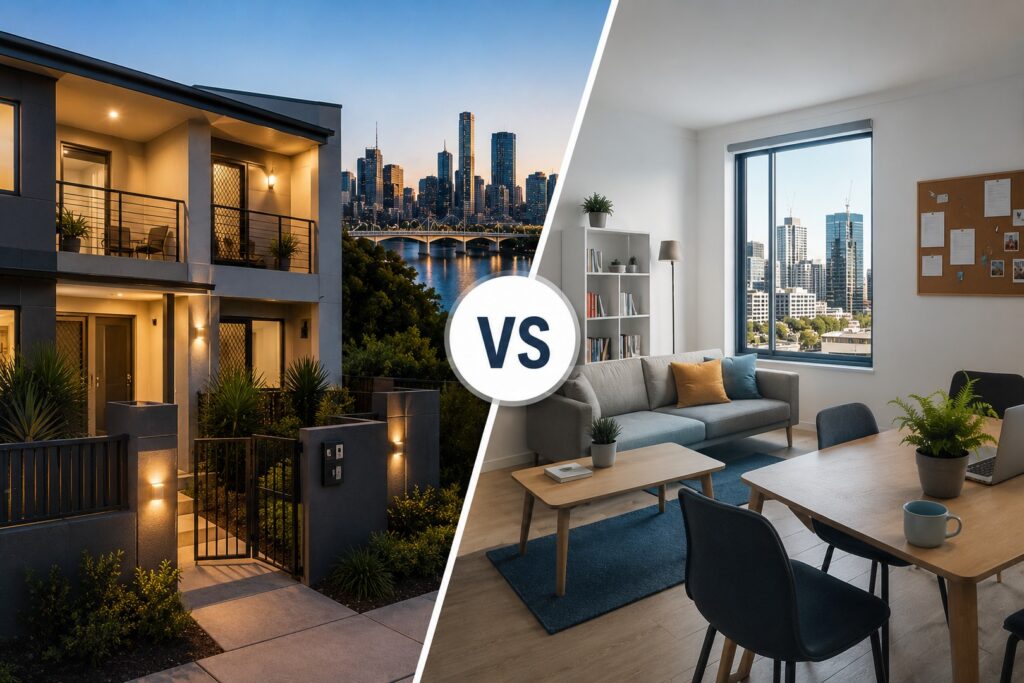
In many cases, converting an existing property costs almost as much as building new while delivering inferior outcomes.
Why Purpose-Built Often Wins
Purpose-built rooming houses optimise layout efficiency, integrate compliance from day one, use modern materials requiring less maintenance, avoid structural compromises inherent in conversions and typically deliver higher rental yields due to better design.
Conversion projects inherit existing building limitations. Room sizes, window placement, ceiling heights and structural elements can’t always be changed economically. This creates compromises that reduce rental performance and tenant satisfaction.
When Conversion Still Makes Sense
Conversion can work when you own the property outright with low holding costs, the existing structure and location are genuinely strong, conversion costs stay well below new construction costs and compliance can be achieved without major structural work.
If you’re buying a property specifically to convert, carefully analyse whether the purchase price plus conversion costs compare favourably to land purchase plus purpose-built construction. Often the numbers favour building new.
Indigo Construction Company’s investment housing developer experience gives them a clear perspective on this analysis. Their property development consultancy helps investors compare options objectively based on actual costs and expected returns rather than assumptions.
The Approval Process for Conversions
Converting a property to rooming house use requires both planning and building approvals.
Development Application
If the existing planning approval doesn’t allow rooming house use, you need a development application. This assesses whether the proposed use suits the site, meets planning scheme requirements and aligns with neighbourhood character.
Building Approval
Even if planning approval isn’t required, building approval definitely is. This ensures the converted property meets Class 1B standards. Expect detailed plans, engineering input, fire safety assessments and accessibility compliance demonstration.
Referrals and Conditions
Applications may be referred to various agencies or departments. Conditions might require infrastructure upgrades, landscaping, or specific construction methods.
Timeline
Combined planning and building approvals for conversions typically take 3 to 6 months minimum, sometimes longer if issues arise or additional information is required.
Experienced consultants navigate this process more efficiently than investors attempting DIY approvals.
Licensing After Conversion
Once conversion is complete, you still need a rooming accommodation provider licence before accepting tenants. This requires passing safety inspections, demonstrating compliance with all requirements, obtaining appropriate insurance and completing fit and proper person checks.
Don’t assume that building approval automatically means licensing approval. They’re separate processes with different requirements.
Why Indigo Construction Company’s Guidance Matters
Indigo Construction Company brings critical perspective to conversion decisions through honest feasibility assessment identifying when conversion makes sense and when it doesn’t, accurate cost estimation based on actual construction experience rather than guesswork, compliance management navigating planning approvals, building certifications and licensing and comparison with purpose-built alternatives showing investors all options objectively.
Their smart housing solutions focus on delivering high-performing rooming houses, whether through conversion or new construction. They’re not selling one approach over another. They’re helping investors make financially sound decisions.
You can explore their property development consultancy and conversion assessment services at IndigoConstructionCompany.com.au.
Key Takeaways
Not all properties suit conversion. Large older homes on good-sized blocks in high-demand locations with existing bathroom capacity and compliance potential make the best candidates. Properties with severe structural issues, inadequate parking, or zoning restrictions rarely work economically.
Class 1B compliance transforms simple renovations into complex projects. Fire safety systems, accessibility standards, structural upgrades and building approvals add significant cost and complexity that many investors underestimate when first considering conversion.
Hidden costs kill conversion returns. Electrical upgrades, plumbing extensions, fire safety installation, structural modifications, compliance documentation and delays often cost double initial estimates. Conservative budgeting with 15 to 20 per cent contingency is essential.
Purpose-built often outperforms conversion financially. When purchase price plus conversion costs approach land cost plus new construction, purpose-built usually delivers better layouts, lower maintenance, higher yields and fewer compromises. Conversion works best when you already own the property or find exceptionally favourable acquisition opportunities.
Feasibility analysis before commitment prevents expensive mistakes. Detailed assessment of planning permissions, parking requirements, structural condition, site constraints and financial viability should happen before purchasing properties for conversion.
Both planning and building approvals are required, along with separate licensing after completion. The approval process typically takes 3 to 6 months minimum with no guarantee of success. Experienced consultants significantly improve approval efficiency and success rates. Indigo Construction Company’s property development consultancy provides honest conversion feasibility assessments, helping Brisbane investors determine whether converting existing properties or building new ones delivers better long-term returns. Explore their objective approach at IndigoConstructionCompany.com.au.