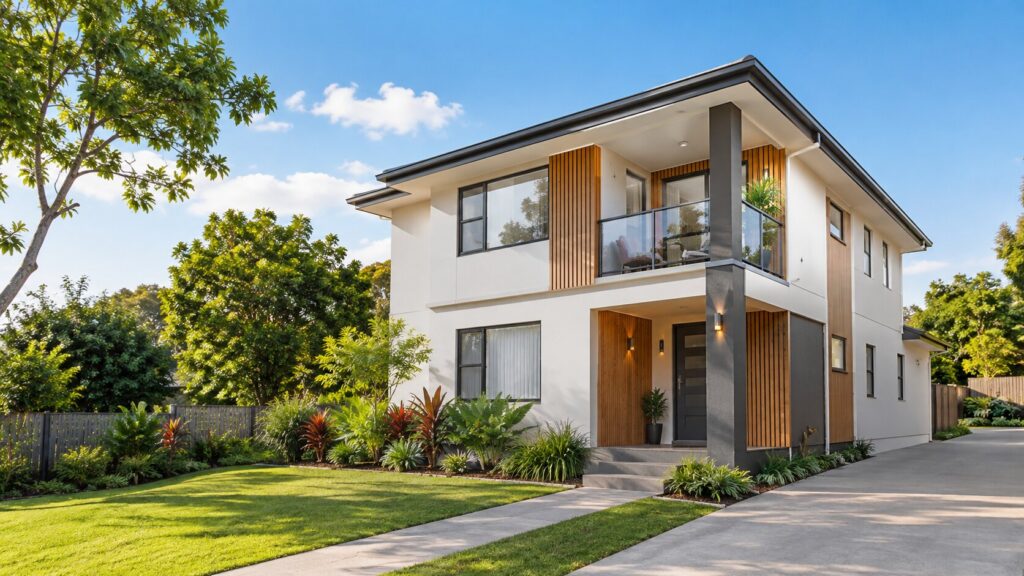
If you look at how homeowners in Australia are planning their future builds, one thing stands out. Sustainability isn’t the extra feature people tack on at the end anymore. It’s becoming the main driver behind design choices, lifestyle decisions and long-term investment thinking. Whether you’re building your first home or planning a multi-unit development, the goal isn’t just creating something beautiful. It’s creating something that works with the climate, reduces running costs and stays comfortable all year.
Net Zero and Passive House principles sit at the front of this shift. They aren’t abstract concepts anymore. Families in Brisbane, the Gold Coast and across Southeast Queensland are asking for homes that are cooler, cleaner, healthier and cheaper to run. And with rising energy costs and hotter summers, the timing couldn’t be better.
This is where Indigo Construction Company comes in with custom house designs that balance performance, comfort and personality. Their approach isn’t about throwing technical jargon at you. It’s about creating homes that feel natural and grounded while quietly using science to support everyday living.
Let’s break down what Net Zero and Passive House actually mean, why they matter for Australian homeowners and how Indigo Construction Company brings these ideas to life in a way that feels effortless.
What Net-Zero Living Really Means
At its core, a net-zero home produces as much energy as it consumes over the year. The idea isn’t complicated, but the execution needs smart planning. Instead of relying on big systems to fix inefficiencies, the home itself is designed to work with the environment.
A net-zero home typically includes better insulation, solar power, energy-efficient appliances, airtight construction, smart ventilation, careful orientation to the sun and climate-responsive design.
When these pieces come together, the result is simple. The house doesn’t rely on the grid for daily comfort and the utility bills drop dramatically.
But here’s the thing. Net Zero isn’t achieved by slapping solar panels on a poorly designed house. It starts much earlier, at the drawing board. That’s why Indigo Construction Company takes a ground-up approach, looking at the site’s natural conditions, shading patterns, orientation, ventilation flow and future lifestyle needs.
Smart design does most of the heavy lifting. Technology fills in the gaps. You can explore Indigo Construction Company’s design philosophy at IndigoConstructionCompany.com.au.
Understanding Passive House Principles
Passive House (or Passivhaus) isn’t about adding gadgets. It’s a performance standard that focuses on reducing the home’s energy demand. A Passive House stays naturally cool in summer and warm in winter with minimal mechanical systems, which is exactly what people want in Queensland’s climate.
Here are the core ideas in simple terms:
1. Exceptional Insulation
Heat stays where it should stay. You don’t lose the cool air in summer or the warm air in winter.
2. Airtight Construction
The home doesn’t leak energy. Drafts are eliminated and indoor comfort becomes consistent.
3. High-Performance Windows
Double or triple glazing keeps conditioned air inside and blocks harsh heat outside.
4. Ventilation with Heat Recovery
Fresh air flows continuously without losing the temperature balance of the home.
5. Smart Orientation
The building is placed and shaped to make the most of natural light while avoiding unnecessary heat.
When all these elements work together, a passive house uses around 70 to 90 per cent less energy than a standard home. That’s a huge win for the planet, but it’s an even bigger win for your wallet.
Why These Homes Make Sense in Australia
Australia’s climate is varied, but across most regions, homes face two main challenges: excessive heat and rising energy prices. With homes becoming more sealed for cooling efficiency, indoor air quality also becomes a priority.
Net Zero and Passive House principles address all of this at once.
1. Better Comfort Throughout the Year
Picture sleeping through a Queensland summer night without blasting the AC. Or walking into a naturally warm living room on a chilly morning. Passive House principles make this possible.
2. Lower Energy Bills
Even with energy costs fluctuating, a home that uses very little power stays affordable to run. Net Zero design takes this further by balancing consumption with solar generation.
3. Healthier Indoor Environments
Filtered, clean, fresh air moves throughout the home. Dust, pollen, bushfire smoke and humidity are managed automatically.
4. Long-Term Durability
Tighter building envelopes reduce moisture issues, mould risks and maintenance over time.
5. Higher Resale Value
Buyers want homes that cost less to operate and feel comfortable year-round. Sustainable homes win on both fronts.
This shift is especially noticeable in the Brisbane property market, where energy-efficient homes are becoming a strong selling point.

How Indigo Construction Company Designs Net Zero and Passive Custom Homes
Indigo Construction Company doesn’t use a cookie-cutter strategy. Every home starts with the site, the climate, the client’s lifestyle and how all these pieces interact.
Here’s the approach in action.
1. Climate-Responsive Layouts
The design team looks at where the breezes come from, how harsh the sun is at different times, where natural shade can be used and how rooms should flow to encourage ventilation. This creates a foundation where the building works with nature instead of fighting it.
2. Smart Material Selection
Insulation, glazing, cladding and roofing all play a part in sustainable performance. Indigo Construction Company selects materials that strike the right balance between durability, thermal comfort, aesthetics and budget.
3. Efficient Building Envelopes
‘Airtight’ doesn’t mean ‘sealed shut’. It means controlling airflow instead of letting it leak unpredictably. Good sealing reduces energy loss and stabilises indoor temperatures.
4. Purposeful Window Placement
Windows aren’t just openings. They’re tools for capturing light, guiding breezes, framing views and regulating heat. Indigo Construction Company places them where they’ll work hardest for the occupant.
5. Integrated Renewable Energy
Most Net Zero homes use a solar PV system, often with battery storage. Indigo Construction Company plans for these systems early in the design, ensuring wiring, placement, angles and shading are optimised.
6. Passive and Mechanical Ventilation
Cross-ventilation is designed into the home’s pathways. For more airtight constructions, balanced ventilation with energy recovery systems ensures fresh air without losing efficiency.
7. Future-Ready Infrastructure
Even if clients don’t want every eco-feature right away, the structure is set up for future upgrades. This is where Indigo Construction Company’s thoughtful planning pays off. You can explore their custom design approach at indigocc.com.au.
The Role of Technology in Sustainable Living
Sustainable living isn’t only about using fewer resources. It’s about using them smarter.
Here’s how technology shapes a net-zero or passive home: smart thermostats reduce unnecessary cooling or heating, energy monitoring systems help people track their usage easily, automated shading devices respond to sunlight, high-efficiency appliances lower consumption and solar batteries store excess power for evening use.
But it’s important to understand that technology is a support system, not the main driver. Indigo Construction Company prioritises strong foundational design so that the home performs well even without heavy reliance on tech. When technology is added, it simply enhances what’s already working.
Why Passive and Net Zero Homes Fit Today’s Lifestyle
Life feels busier for everyone. Families want homes that reduce stress, not add tasks to the list. Sustainable homes quietly take care of themselves.
The temperature stays naturally balanced. The air stays fresh. Energy consumption stays low. Maintenance remains predictable. Running costs stay stable.
This makes these homes especially appealing to people building their “forever homes” as well as investors planning long-term rental properties that attract quality tenants.
Design Flexibility with Indigo Construction Company
One common misconception is that sustainable homes require a rigid aesthetic. In reality, passive and net-zero design principles can fit modern homes, coastal homes, acreage builds, compact urban homes, multi-unit developments and rooming house projects.
Indigo Construction Company adapts these ideas to the client’s design preferences so the home never feels restricted or repetitive. Sustainability becomes the hidden engine behind the comfort.
What This Means for the Future of Australian Housing
Australia is moving toward a more sustainable housing future whether people realise it or not. Government standards are tightening. Buyers are becoming smarter. And the market is rewarding homes that can perform well without expensive energy use.
Net Zero and passive homes aren’t just environmentally responsible. They’re financially logical.
A sustainable home costs less to operate, reduces environmental impact, holds value longer, appeals to future buyers and stays comfortable regardless of season.
With builders like Indigo Construction Company already integrating these principles into their everyday design process, the shift becomes accessible to more families.
Key Takeaways
- Sustainability isn’t an add-on anymore. It’s the main driver behind most new custom home designs in Australia.
- Net Zero homes produce as much energy as they consume. The key is smart design first, technology second.
- Passive House principles reduce energy demand by 70 to 90 per cent through insulation, airtightness, high-performance windows and smart ventilation.
- These homes make financial sense. Lower energy bills, higher resale value and predictable running costs add up over time.
- Climate-responsive design works with your environment instead of fighting it. Orientation, shading and natural ventilation do most of the heavy lifting.
- Indoor air quality improves dramatically. Filtered fresh air continuously circulates without losing temperature balance.
- Future-proofing starts at the design stage. Build the infrastructure now so upgrades are easy later.
- Sustainable design doesn’t limit aesthetics. Net Zero and Passive House principles work with any architectural style.
- Technology enhances performance but isn’t the foundation. Strong design allows homes to perform well even without heavy tech reliance.
- Indigo Construction Company tailors sustainable design to your lifestyle and site conditions. Check out their approach to climate-smart custom homes at IndigoConstructionCompany.com.au.