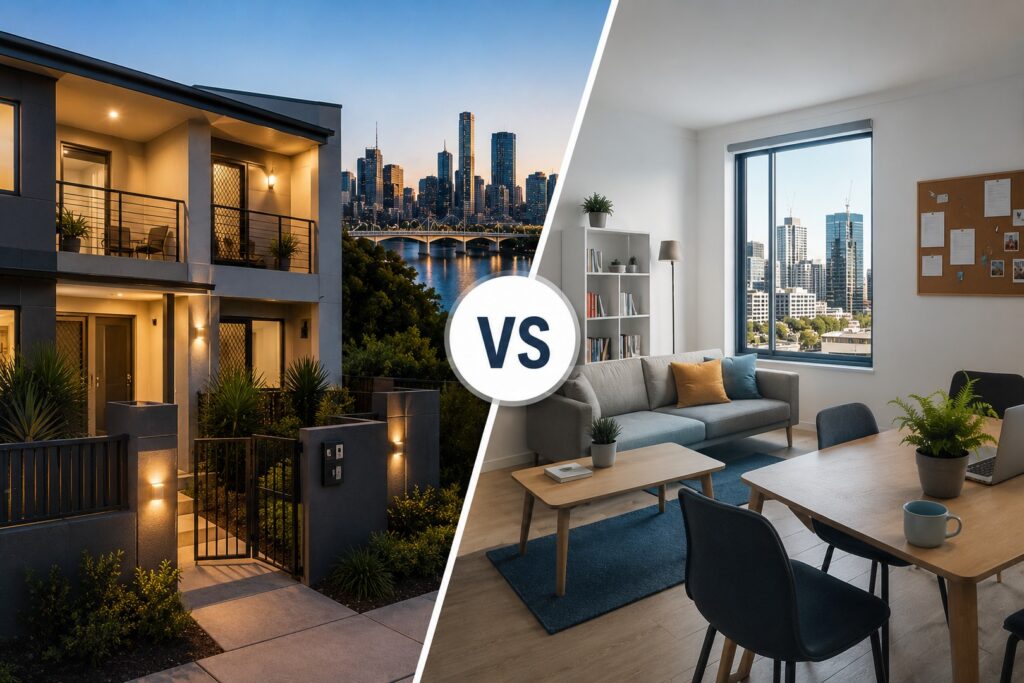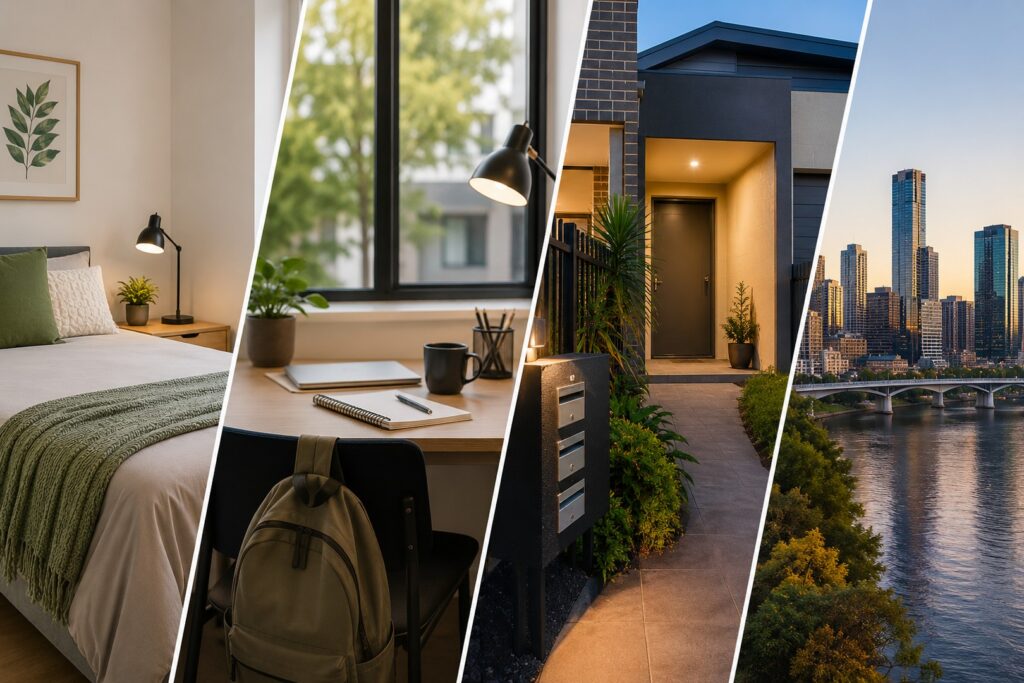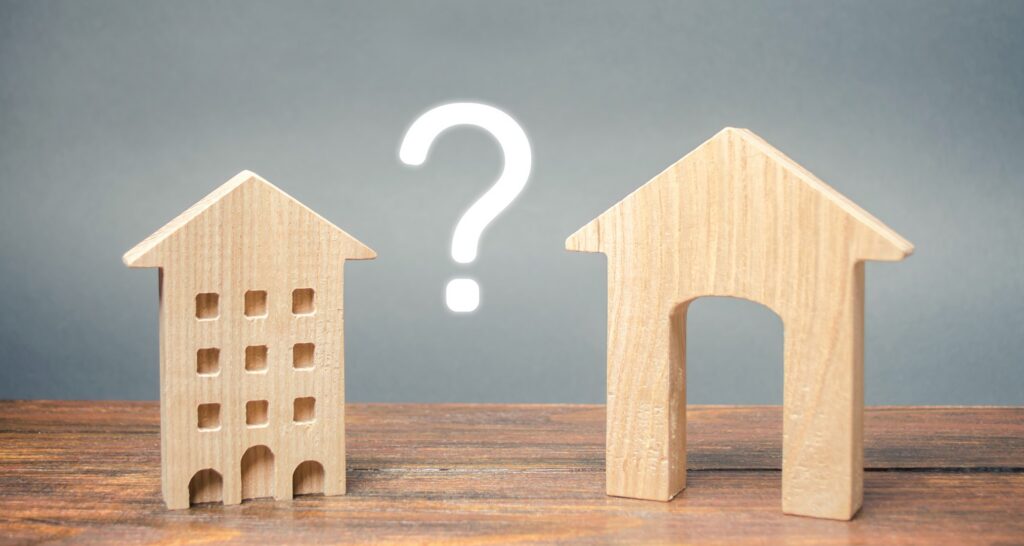
You’ve decided to rent in a new city. Now you need to decide between a rooming house and a share house. You will have to understand a few important differences since they have different agreements, privacy levels, responsibilities, costs, and other factors that contribute to your daily routine.
Ultimately the best option will depend on your budget, your willingness to give up freedom or comfort and the type of rental you are being offered. It is important to look into a few differences to understand how a rooming house and share house will impact your rights and responsibilities before you sign a contract.
What are Rooming Houses?
Rooming Houses are usually have designated private bedrooms. Residents of Rooming Houses share the use of common facilities or rooms. In QLD the Residential Tenancies Authority defines rooming houses, or rooming accommodations, as a situation in which residents rent a room from a provider, agent, or property manager and share baths, kitchens, and common rooms.
This type of housing can accommodate people who cannot afford to rent an entire unit or an entire house. This type of housing can also accommodate students, workers, and people who participate in flexible or short term leasing.
Rooming houses today have a modern take on a more classic style of accommodation. Modern rooming houses may have in-suite bathrooms, air conditioning, secure rooms, Wi-Fi, built-in storage, and well-designed rooms for more efficient and effective sharing and use of space. More importantly, using a professional rooming house builder Brisbane will help you achieve a balance between quality and comfort for your future rooming house residents.
Share House
A share house is a rented house that two or more individuals occupy. There may, or may not, be a tenancy agreement for each of the individuals.
According to the RTA, when two or more individuals have a tenancy agreement, they are called co-tenants. Co-tenants may share the liability, or have separate liability.
Share houses are rented like normal homes, and the residents have the responsibility to rent the house, pay the utilities, and share the housekeeping. This also means that you may have to deal with some roommate disputes like managing shared costs and cleaning the house.
The main difference between rooming houses and share houses is the type of agreement used.
Residents of a rooming house may be under a Rooming Accommodation Agreement (Form R18). The RTA states that this agreement establishes the terms of the resident’s stay in rooming accommodation and must be clearly stated.
In a share house, the general tenancy agreement, Form 18a, will cover renting a house, unit, apartment, townhouse, or houseboat in Queensland.
This distinction has implications on your legal standing, responsibilities, and notice requirements, which could be different. Make sure to ask what kind of agreement you will be signing, if it is a rooming accommodation agreement, general tenancy agreement, or a sub-tenancy agreement.
Key Difference 2: Privacy and Control
At a rooming house, you have control over your room, while common areas are controlled by the provider, or property manager. House rules control guests, noise, cleaning, smoking, parking, common areas, and behavior.
The RTA says that Queensland rooming accommodation includes rooming house house rules. In addition to house rules, the provider may make up their own rules. House residents should have a copy of the rules, and they should be posted at the property.
In contrast to a rooming house, a share house usually has informal house rules which are agreed upon by housemates. While this may seem more enjoyable, it can lead to problems when expectations are not clearly defined. For example, a messy kitchen, unpaid bills, or noisy guests.
Key Difference 3: Rent and Bills
Rooming houses frequently have more straightforward rent systems. In many instances, rent could cover some or all utilities, like electricity, water, internet, and/or the use of basic furniture. However, this is not a certainty, and renters should get it in writing.
In a share house, your housemates pay your rent with you, and so do your bills. Share house living can be cheaper, but some housemates pay bills late or use the house amenities too quickly. They may even move out at inconvenient times.
To sub-let means to rent out a room you are leasing to someone else. The RTA says written permission by the property manager or owner is required to sub-let a room. Some room share arrangements may be totally unapproved, so it is important to provide proper notice.
Key Difference 4: Flexibility
If you need housing quickly, a rooming house is a great option, as they are short to medium term housing. Rooming houses also typically require less commitment as you generally only rent a single room.
Share houses can feel homeier, but they are also more responsibility. You will most likely, have to help manage the bills, the furniture, the inspections, the cleaning, and the lease.
If you value independence rooming houses may be a better option for you. Share houses allow for greater control over the house and greater social interaction.
Why Property Quality Matters
Rooming houses can be a congested and poorly designed option and share houses can feel crowded as well. Both of these options can lead to unsafe or uncomfortable living.
This explains the role of a rooming house builder brisbane and additional rooming accommodation projects. Practical room layouts, enough bathrooms, good ventilation, fire safety provisions, secure entry, sound control, storage, and clean shared spaces are features of good design.
Investors looking for a rooming house for sale brisbane, would generally consider the rental yield and the performance of the investment. For the person renting the room, the consideration would be the liveability of the accommodation. A rooming house could be affordable, but should not be at the expense of safety, cleanliness, compliance, and comfort.
Brisbane Approval and Compliance
Rooming accommodation in Brisbane could require planning and/or building approval depending on the property and how it is operated. According to Brisbane City Council, a rooming accommodation business would require planning and building approval before it can be established.
For the person renting the accommodation, it is therefore reasonable to ask if the property is professionally managed and if the pertinent approvals have been obtained. Compliance of the property is a good indication of safety and reliability of the accommodation.
Which Option is Right for You?
If you are new to Brisbane, you are a student, a temporary worker, or looking to save on rental costs, a rooming house is a good option to flexible shared accommodation with a private room, less rental commitment, and a low upfront cost.
If you have a group of friends or family, or people you want to live with in the same house, a share house is a good option for a traditional home with a greater level of control over the household and shared decision making and more social interaction with housemates.
Before deciding, examine the property, read the agreement, understand the inclusions, read the house rules, confirm bond particulars, and inquire about repair procedures.
Final Thoughts
While a rooming house and a share house may appear to be the same, they may be significantly different. A rooming house generally consists of you leasing a separate room under rooming accommodation regulations, whereas a share house consists of leasing a standard rental dwelling together with a number of co-tenants or sub-tenants.
From a tenant perspective, the best option is dependent on your lifestyle, budget, privacy, flexibility, and the type of legal agreement. Whether you are comparing accommodation listings, talking to a provider, or looking for a rooming house for sale in Brisbane and the surrounding areas, always focus on safety, clarity, and comfort first.
Frequently Asked Questions
1. What is the difference between a rooming house and a share house?
Typically, in a rooming house, you lease a separate room and share facilities with other tenants, whereas in a share house, the rental house is leased as a whole by the tenants.
2. Is a rooming house generally cheaper than a share house?
Generally yes, as you only have to lease a room (potentially with some utility inclusions), but it all depends on the location and quality of the property, inclusions, and management.
3. Who is a rooming house best suited to?
Potentially people that are looking for inexpensive accommodation, flexible living, privacy with a room, and less responsibility with the lease arrangement.
4. Who should live in a share house?
A share house appeals to those wanting a living situation more like a traditional house. This option allows a house full of roommates to participate in decisions as a group. This option tends to give housemates a more social living experience.
5. Why hire a rooming house builder Brisbane?
A qualified rooming house builder Brisbane has the tools to elevate your property with superior layouts, design, safety, and comfort. They are also equipped to enhance your property’s shared spaces and ease ventilation issues while improving resident privacy.
6. Why do people want to find a rooming house for sale Brisbane?
People searching for a rooming house for sale Brisbane are often looking for rooming house investment properties, development opportunities, or for rooming houses to rent or buy in Brisbane.