Australia is facing a growing housing shortage, with demand for affordable accommodation outpacing supply in major cities like Brisbane. Rising population levels, increased migration, and limited housing development have created a significant gap particularly in the rental market.
As governments and developers look for practical solutions, rooming houses are emerging as a key part of the answer.
By delivering higher-density housing without large-scale infrastructure, rooming houses offer a scalable and efficient approach to addressing Australia’s housing challenges while supporting smarter housing strategies.
Understanding Australia’s Housing Shortage
The housing shortage is driven by several national factors:
- Population growth and urban migration
- Limited new housing supply
- Rising construction and land costs
- Increasing demand for affordable rentals
These pressures are especially visible in urban centres, where affordable housing options are becoming harder to find.
This trend is reflected in Brisbane rooming house investment trends.
Why Rooming Houses Are a Practical Solution
1. Increasing Housing Supply Without Large Developments
Rooming houses allow developers to increase housing capacity within existing residential areas.
They:
- Maximise occupancy per property
- Utilise existing land more efficiently
- Require less large-scale infrastructure
This approach aligns with converting existing Brisbane properties into rooming houses.
2. Providing Affordable Living Options
Affordability is one of the biggest challenges in Australia’s housing market.
Rooming houses offer:
- Lower rental costs
- Shared living expenses
- Flexible accommodation
To understand how this model works, see the difference between a rooming house, boarding house, and share house.
3. Supporting High-Demand Rental Markets
With vacancy rates remaining low, shared housing models are becoming more accepted across Australia.
Rooming houses cater to:
- Students
- Young professionals
- Key workers
Their impact on returns is explained in how rooming house developments generate positive cash flow
Role in Smarter Housing Strategies
As Australia moves toward more efficient housing models, rooming houses are becoming central to smarter housing solutions.
They contribute by:
- Increasing housing density
- Reducing per-person living costs
- Optimising land use
These principles connect with smart property development and housing innovation trends
Designing for Sustainability and Efficiency
Modern rooming houses are not just about density – they are also designed for sustainability.
Key features include:
- Energy-efficient systems
- Climate-responsive design
- Durable construction materials
These concepts are explored in net zero and passive custom house designs
Regulations and Compliance in Australia
Rooming houses must comply with strict regulations, which vary by state and local councils.
Key requirements include:
- Licensing approvals
- Safety and building standards
- Zoning regulations
It’s important to review licensing and safety requirements for Brisbane rooming houses
The Role of Structured Property Development
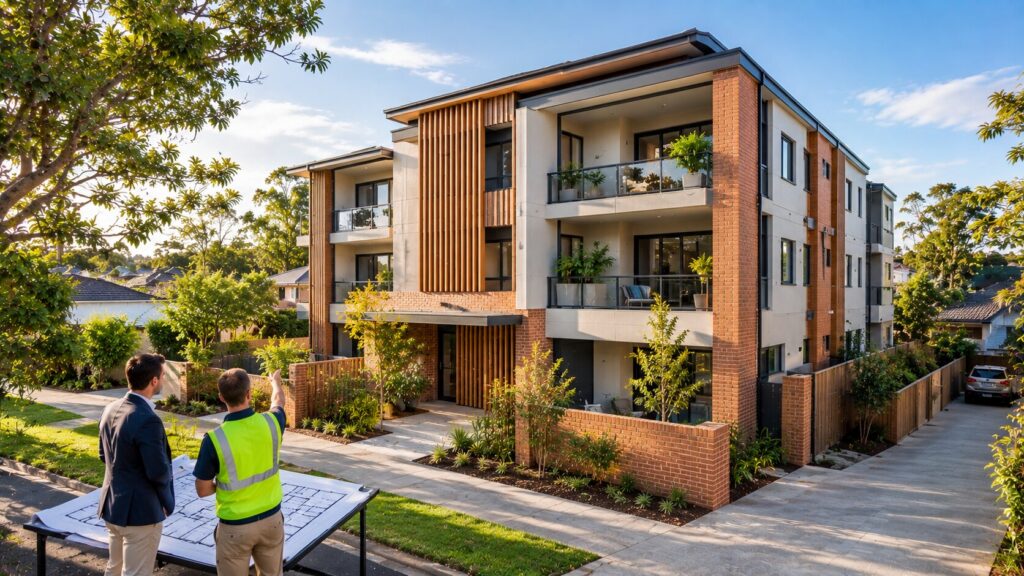
To successfully deliver rooming house projects at scale, a structured development process is essential.
This includes:
- Feasibility studies
- Planning approvals
- Design and build coordination
- Project execution
Why Rooming Houses Are a Long-Term Solution
Rooming houses are not a temporary fix, they are a sustainable part of Australia’s future housing landscape.
They offer:
- Scalable development opportunities
- Strong investment returns
- Practical solutions to housing shortages
As housing demand continues to grow, this model will play an increasingly important role.
Conclusion
Australia’s housing shortage requires innovative and scalable solutions and rooming houses are proving to be one of the most effective. By combining affordability, efficiency, and strong rental demand, they provide a practical pathway for addressing housing challenges while supporting long-term investment growth.
With experienced developers like Indigo Construction Company leading the way, rooming houses are set to become a key part of Australia’s housing future.
Frequently Asked Questions
1. What is causing Australia’s housing shortage?
Population growth, limited housing supply, rising costs, and increasing rental demand are the main factors.
2. How do rooming houses help solve housing shortages?
They increase housing density, provide affordable options, and make better use of existing properties.
3. Are rooming houses a good investment in Australia?
Yes, they can offer higher rental yields and consistent demand, especially in major cities.
4. Do rooming houses require approval in Australia?
Yes, they must comply with local council regulations, licensing, and safety requirements.
5. Are rooming houses sustainable housing solutions?
Modern designs incorporate energy efficiency and smart layouts, making them more sustainable than traditional housing.